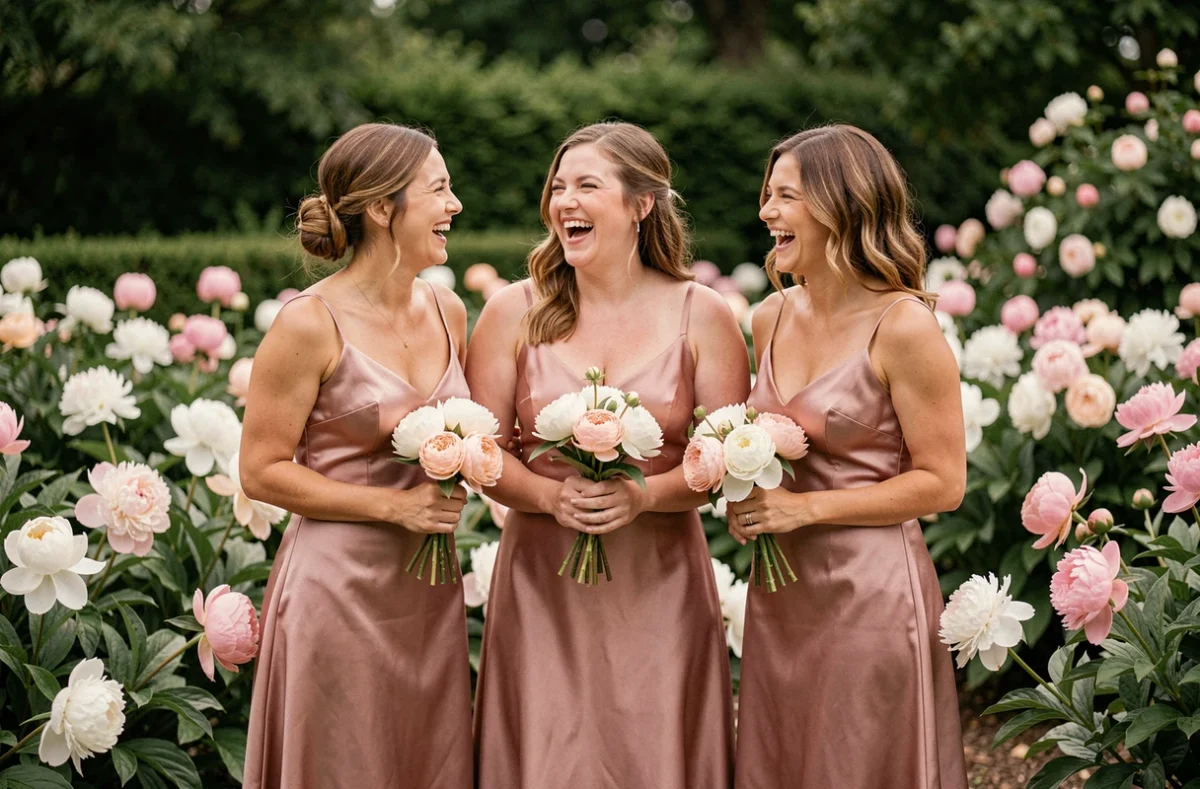
In France, the maid of honor has a unique place at a wedding: neither a legal civil witness nor simply a guest, she takes on a supporting role whose boundaries are often unclear. A civil wedding requires designated witnesses to sign the register, but a maid of honor does not automatically have this status. This distinction, rarely discussed in advance, nevertheless shapes how responsibilities are divided on the big day and in the weeks leading up to it.
Maid of honor and wedding witness: a common mix-up to clear up early
The first question to ask the bride is simple: is the proposed role purely ceremonial, or does it also include serving as a civil witness? The two are not interchangeable. The witness signs the register at the town hall and assumes administrative responsibility. The maid of honor, on the other hand, provides logistical, emotional and aesthetic support, with no legal obligations.
Confusing the two can lead to real misunderstandings. A maid of honor who thinks she is a witness may find herself absent from the civil ceremony, while someone appointed as a witness may not realize that much more than a signature is expected of her. It is best to have an honest conversation as soon as the role is offered, clarifying what falls under official protocol and what counts as personal support.
The La Demoiselle D’Honneur website outlines the duties commonly associated with this role, helping the bride and her loved ones agree on expectations before anyone commits.
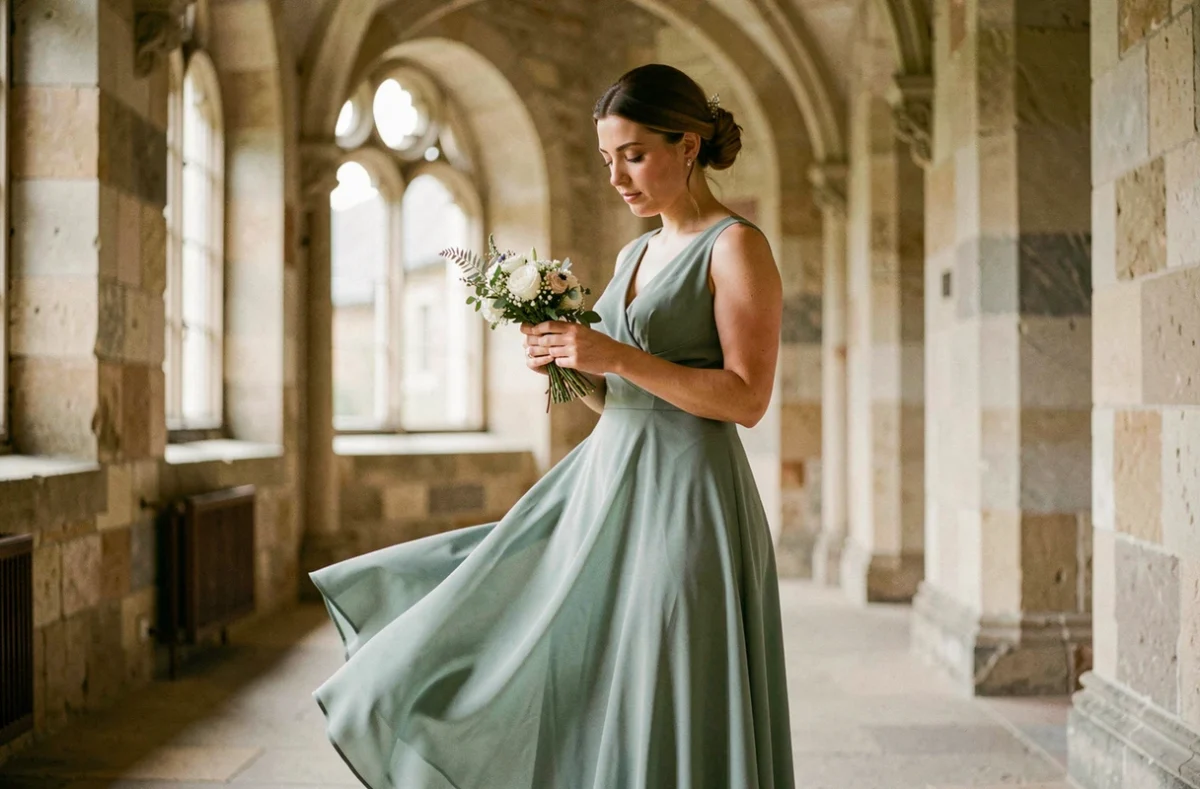
Maid of honor outfit budget: a conversation that often gets overlooked
The cost of the dress, accessories and alterations is a subject many maids of honor are reluctant to bring up. With the average budget for a wedding with one hundred guests exceeding 19,000 euros, every expense matters, including those incurred by the wedding party.
The bride may choose a specific design, require a particular color or select a certain designer without realizing how much it will cost each maid of honor. Alterations, matching shoes, hairstyling and makeup: the bill can add up quickly.
Practical ways to keep costs under control
- Agree from the outset on a price range that works for everyone, including alterations and accessories
- Explore secondhand options: a formal dress worn just once is easy to find in excellent condition, reducing costs and avoiding the purchase of a garment that will rarely be worn again
- Set a color or palette rather than requiring everyone to wear the same design, so each person can choose an outfit that fits her budget without disrupting the overall look
A dress bought new for a wedding and never worn again is a form of waste the textile industry knows all too well. Secondhand shopping makes it possible to combine elegance with a realistic budget, without compromising on style on the big day.
How to support the bride without taking over
The maid of honor’s role calls for a delicate balance. If she stays too much in the background, the bride is left to handle stressful situations alone. If she gets too involved, she may overstep the couple’s decisions or interfere with the work of a wedding planner.
Supporting the bride means anticipating her needs without imposing solutions. In practice, this means taking specific actions rather than adopting a general “right-hand woman” role.
Before the wedding: prepare, but don’t make decisions
The months leading up to the ceremony are when most of the work takes place. Attending fittings, passing practical information on to guests and organizing a possible bachelorette party all require time and availability. The pitfall is taking unrequested initiatives, such as contacting a vendor directly or changing the seating plan.
Any action that affects the wedding budget or arrangements should go through the bride. This simple rule prevents most friction.
On the big day: discreet logistics and emotional support
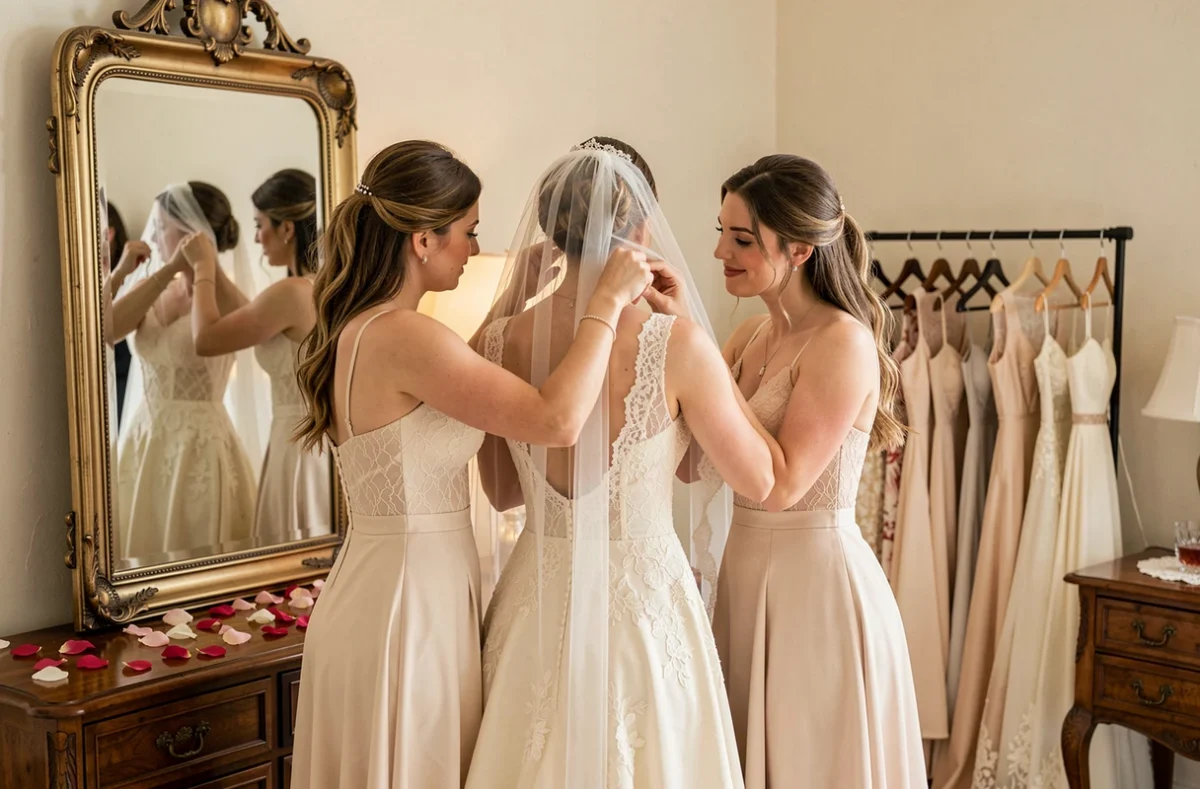
On the wedding day, the maid of honor acts as a go-between for the bride and the rest of the group. Checking that the wedding dress is sitting properly before each round of photos, keeping an emergency kit on hand (safety pins, tissues, stain remover) and directing guests who have lost their way: these tasks go unnoticed when done well.
One aspect that is rarely discussed is the accessibility of the reception venue. If older guests or guests with disabilities are attending, the maid of honor can check routes, restrooms and available seating in advance, then pass this information on to those concerned without making assumptions about their needs.
Maid of honor speech: what works and what can go wrong
Speaking in front of the guests is one of the most daunting duties. The pressure is twofold: to move the couple and entertain guests who may not all share the same references.
Memorable speeches tend to follow the same structure. They begin with a specific, verifiable memory (a moment shared or a dated anecdote), then connect it to the couple as they are today. A good speech lasts between two and four minutes, no longer.
- Avoid inside jokes that half the room won’t understand: if an anecdote needs three sentences of explanation, it won’t work aloud
- Don’t bring up exes, drunken nights or embarrassing moments, even as a joke: what gets a laugh among close friends may make the family uncomfortable
- Practice out loud at least three times before the big day, with a timer, to adjust the pace and spot any parts that don’t sound right
Giving a speech is not compulsory. If public speaking causes genuine anxiety, a letter read to a small group or a symbolic gesture can work just as well as a formal speech. The bride would rather have a relaxed maid of honor than a paralyzed speaker.
Ultimately, being a maid of honor comes down to one simple skill: understanding what the bride needs without waiting for her to spell it out, while respecting the line between offering support and taking control. The outfit, speech and logistics are just ways to help. What remains after the wedding is the quality of your presence.