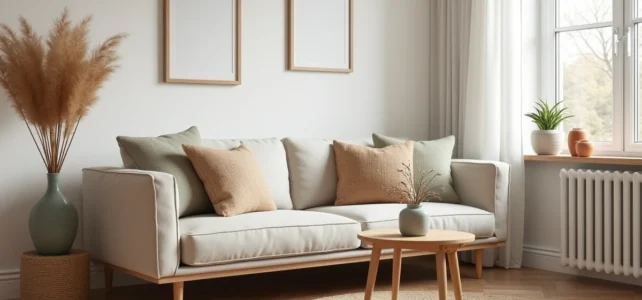
Interior decoration is often measured through subjective criteria: trendy colors, Scandinavian or bohemian style, furniture choices. Environmental psychology invites us to look elsewhere. What determines the effect of a space on its occupants relies more on the management of contrasts (shadow and light, matte and shiny, empty and full) than on the displayed decorative style. Understanding these mechanisms allows us to prioritize the levers that truly transform a room.
Visual contrasts and perceived comfort: what environmental psychology research reveals
Sally Augustin, a researcher referenced in the Journal of Environmental Psychology and author of the book “Designology” (Routledge, 2020), has synthesized years of work on the link between interior design and well-being. Her findings put into perspective most decor advice focused on colors or objects: it is the management of contrasts that soothes or stimulates an interior, not the chosen style.
See also : Tips and Effective Methods to Accurately Measure Your Motorcycle's Mileage
A completely matte living room, without texture play, produces a sense of flatness, regardless of the budget invested. Conversely, contrasting a glossy surface with a raw textile, or creating a deliberate shadow area near a light source, generates a perceived depth that alters how one inhabits the room.
Recommended read : Maximize Your Google Searches: 15 Tips and Tricks to Know
Three axes of contrasts deserve to be prioritized in each room:
- The shadow/light couple: a single ceiling light flattens the space. Multiplying sources (reading lamp, low garland, directional spotlight) creates visual layers that structure the room without partitions.
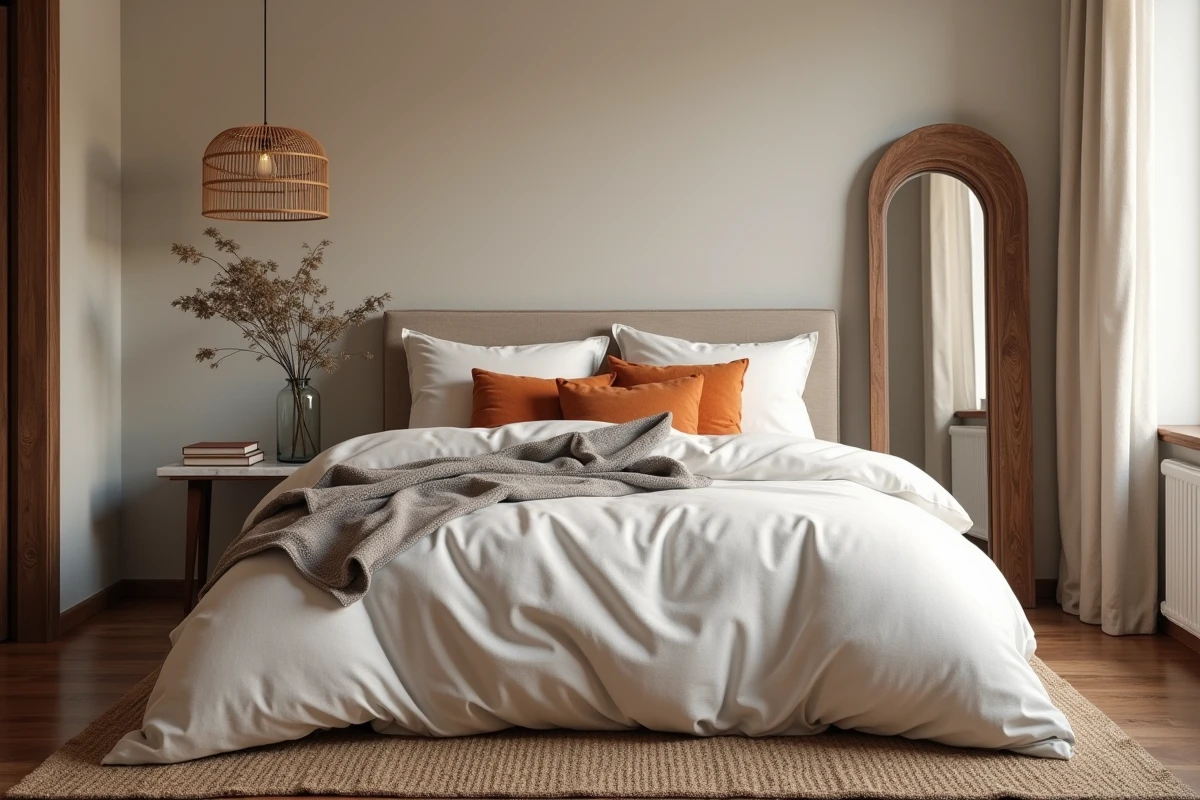
- The matte/shiny couple: pairing a matte finish on a wall with a mirror, a glazed ceramic vase, or a glass-framed picture is enough to energize an entire section of the decor.
- The empty/full couple: leaving a bare wall facing a cluttered shelf creates a visual rhythm. Overloaded interiors are tiring, while overly stripped interiors can be unsettling. The balance between dense areas and open spaces determines perceived comfort.
These principles work with both new furniture and thrifted pieces. To explore ranges that allow for playing with these associations, interior decor on Maisons Euro France offers selections where varied textures and finishes coexist.
Modular decoration and remote work: how usage reconfigures the layout
Since 2023, the Domestic Usage Observatory of Ademe (study “Living and Teleworking”, 2023 edition) and the Maison & Objets/Côté Maison report (“New Ways of Living”, 2023) document the same phenomenon. Customers of decoration brands in France increasingly request reconfigurable layouts in less than ten minutes between work mode and relaxation mode.
Modular decor is not just a gadget. It responds to a concrete spatial constraint: a living room that serves as an office during the day must regain its resting function in the evening. The rising solutions are rolling furniture, lightweight partitions, magnetic lighting, and reconfigurable shelves.
| Type of furniture | Main function | Reconfiguration |
|---|---|---|
| Rolling desk | Workstation | Pushed against a wall or into a hallway at the end of the day |
| Textile partition or lightweight screen | Visual separation | Folds or moves to open up the living space |
| Magnetic light fixture | Targeted lighting | Repositions according to the activity (reading, screen, meals) |
| Modular shelf | Storage and decor | Elements added or removed according to current needs |
This table illustrates a simple principle: the flexibility of a piece of furniture is as important as its aesthetics. A beautiful armchair that is impossible to move hinders the layout of a multifunctional room.
Second-hand and decor trends: the influence of the vintage market on interior style
The use of second-hand items for decoration is strongly increasing in France. Platforms like Selency or Leboncoin report a continuous rise in searches for terms like “vintage decor,” “rattan,” “formica,” and “colored glassware.” This movement is not limited to an ecological approach: it shapes aesthetic trends themselves.
A thrifted rattan piece or a formica table imposes a visual vocabulary that standardized new items do not offer. Irregularities, patinas, and atypical formats create precisely the contrasts discussed in environmental psychology research. A vintage object introduces a texture and era shift that enriches the whole without effort in coordination.
A common pitfall is accumulating vintage pieces without a guiding thread. Colored glassware works in a neutral-toned interior because it creates a focal point. Placed in a living room already saturated with colors, it gets lost. The selection criterion remains the same: what contrast does this object bring to the existing space?
Plants and natural light: an often underutilized decoration lever
Plants are among the most sought-after decorative elements (the term appears in all queries related to interior decor inspiration). Their real effect depends on their placement in relation to natural light.
A plant placed between a window and the interior filters light and creates a play of cast shadows that evolves throughout the day. This subtle movement animates a static space. In contrast, a plant relegated to a dark corner produces no decorative effect and quickly withers.
Three practical rules improve the integration of plants into an interior:
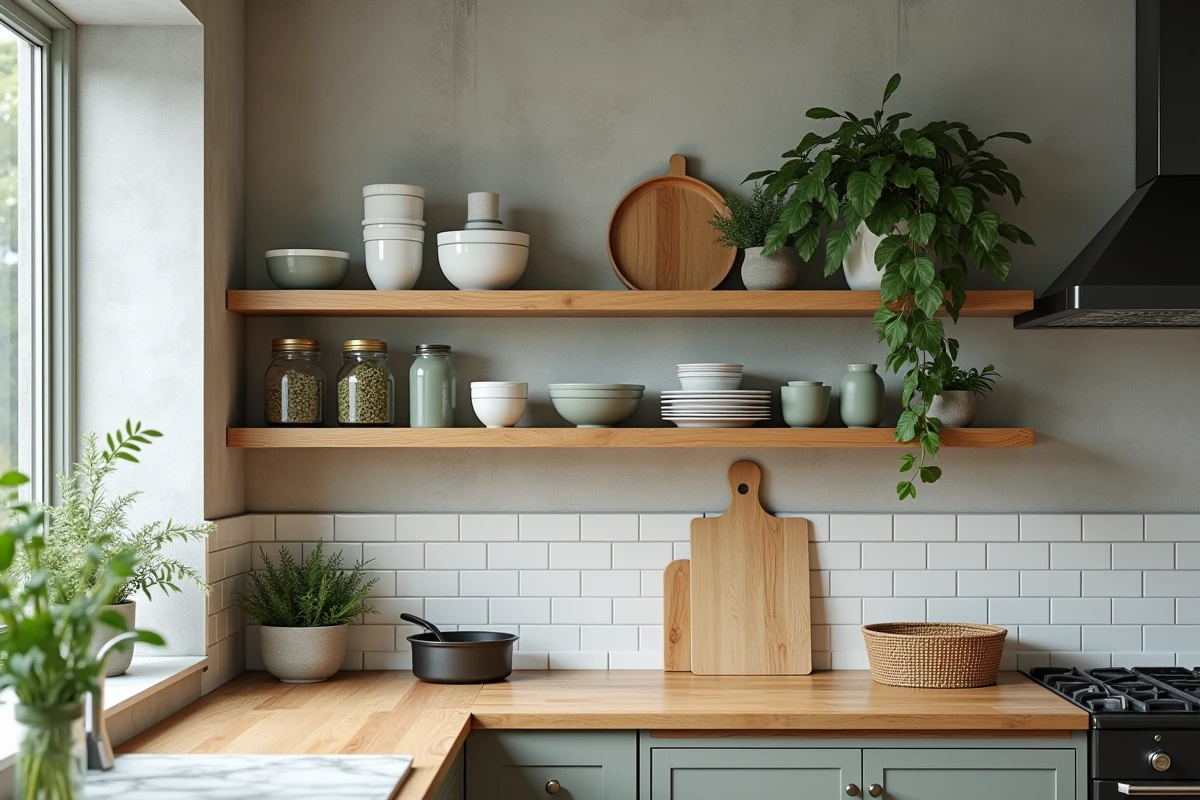
- Favor containers with finishes that contrast with the foliage (raw terracotta pot for a shiny plant, glazed cache-pot for matte foliage).
- Vary heights: one plant on the floor, one hanging, one on a piece of furniture. This arrangement occupies vertical space, often neglected.
- Group plants by area rather than scattering them throughout the room. A dense plant island creates a more striking visual anchor than five isolated pots.
Interior decoration gains coherence when it relies on measurable principles (contrasts, modularity, placement) rather than fleeting trends. An effective interior first addresses usage problems before following a style. Choices of furniture, lighting, and texture form a system, and it is the balance of this system that produces the comfort felt on a daily basis.