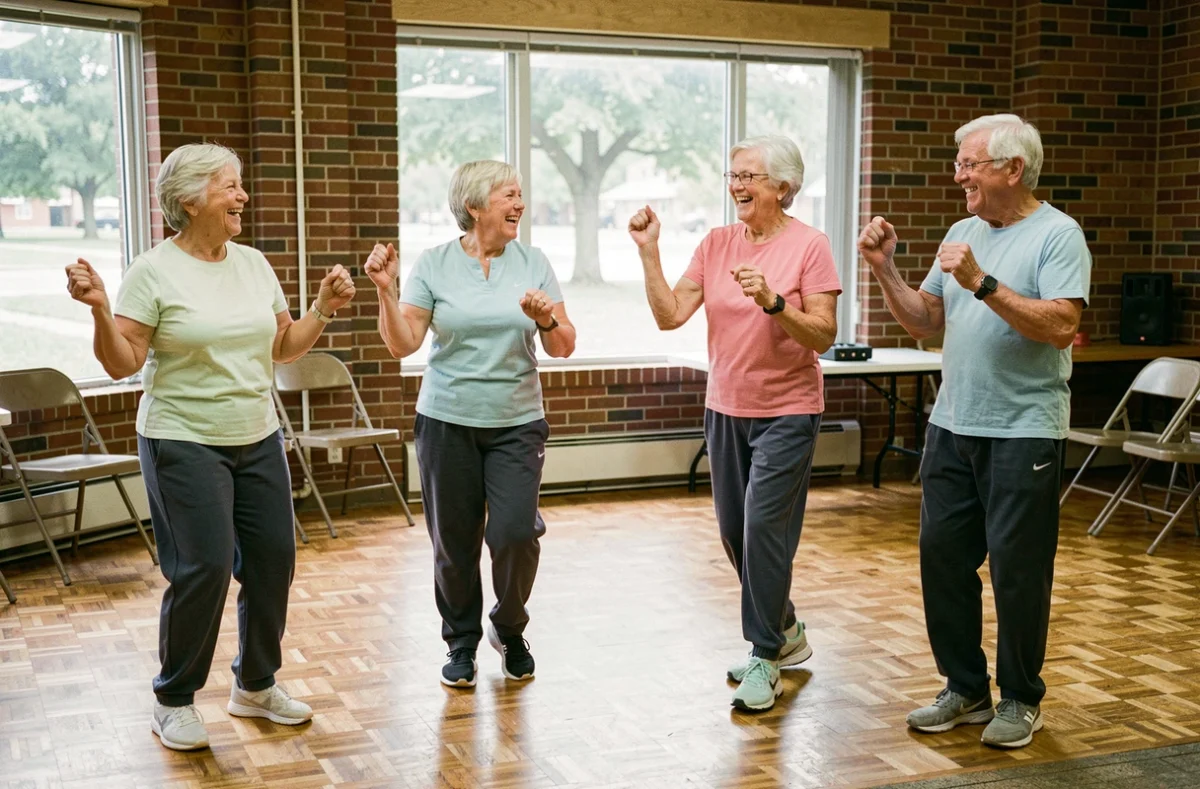
Resuming regular activity after retirement does not require athletic performance. Often, all it takes is a location, a fixed schedule, and a few familiar faces. Senior clubs fulfill exactly this role: they offer dance, adapted sports, and cultural workshops in an environment designed for those over 60.
Personalized assessment before the first session: a guide to choosing your senior club
Have you noticed that many group classes for seniors look alike? Gentle gymnastics on Tuesday, aquagym on Thursday, and sometimes a memory workshop on Friday. The problem is that these standardized formats do not take into account joint pain, chronic fatigue, or fear of falling.
The first appointment should be a personalized assessment, not a group session. A professional in adapted physical activity (APA) evaluates the mobility, functional limitations, and concrete goals of each individual. This step helps distinguish a club that truly adapts its activities from one that merely carries a “senior” label.
This type of support can be found in the clubs on the Le Club des Seniors website, where programs combine various disciplines based on each member’s profile.
Specifically, an assessment can last about thirty minutes. It focuses on everyday movements: getting up from a chair without support, walking in a straight line, reaching for an object overhead. These simple tests guide participants towards the most relevant workshops.
Exercise on prescription and senior clubs: what changes with the 2023 decree
The legal framework for exercise on prescription has evolved. The decree n° 2023-235 of March 30, 2023 expands the prescription of adapted physical activity beyond just long-term conditions. Certain chronic diseases, situations of loss of autonomy, and risk factors are now included.
For senior clubs, this evolution changes the game. A doctor can direct a patient to a muscle strengthening or Nordic walking workshop in a local association. The club then becomes a prevention relay, not just a leisure venue.
Reimbursement remains a gray area
Even when prescribed by a doctor, APA is not automatically reimbursed by Health Insurance. Funding depends on local authorities, complementary health insurance, or local schemes. Before signing up, it’s best to check with your health insurance provider if partial coverage exists.
This financial barrier explains why some people refrain from joining a club, even when they have a medical prescription in hand. Associations that offer differentiated pricing based on income or that benefit from municipal subsidies facilitate access.
Dance, strengthening, balance: why one type of activity is not enough
The recommendations for those over 65 do not limit themselves to a single form of exercise. They combine three complementary aspects:
- Endurance: Nordic walking, ballroom dancing, stationary cycling. These activities engage the cardiovascular system over extended periods.
- Muscle strengthening: exercises with elastic bands, light weights, or body weight. They preserve muscle mass, which naturally decreases with age.
- Balance training: tai chi, exercises on unstable surfaces, motor skills courses. This aspect is directly related to fall prevention.
A club that only offers gentle gymnastics or dance overlooks at least one of these aspects. Before enrolling, it is useful to check if the program covers all three areas, even if alternately throughout the week.
Dance, a special case
Ballroom dancing or line dancing naturally combines endurance and coordination. It engages memory (remembering steps), balance (changes in direction), and social connection (practicing in groups or pairs). It is one of the few activities that checks multiple boxes in a single session.
However, it does not replace targeted muscle strengthening work. A good program might combine, for example, two dance sessions and one strengthening session per week.
Sport-Health Houses: a point of orientation before the club
Not sure which club to turn to? Sport-Health Houses serve as an additional entry point to traditional associations. They welcome anyone looking to resume physical activity, including seniors who have been away from sports for a long time.
Their role is not to replace clubs but to provide guidance. After an interview, they direct individuals to suitable structures: local sports associations, municipal workshops, small group classes led by educators trained in APA.
This orientation step is particularly useful for individuals coming out of a prolonged period of inactivity or managing multiple health issues. It prevents them from ending up in a class that is too intense or, conversely, in a workshop that offers no real benefit.
Memory and cultural workshops: the other pillar of senior clubs
Physical activity is just one part of what senior clubs offer. Cognitive and cultural workshops play an equally important role in maintaining autonomy.
Memory workshops, for example, work on attention, word retrieval, and logic through structured exercises. They do not cure anything, but they maintain cognitive functions that decline without regular stimulation.
Cultural activities (shared reading, museum outings, writing workshops) provide another type of stimulation. They create social connections around a common subject, which reduces feelings of isolation, often heightened after retirement.
- Memory workshops: logic exercises, word games, attention training
- Cultural outings: guided tours, cinema, thematic conferences
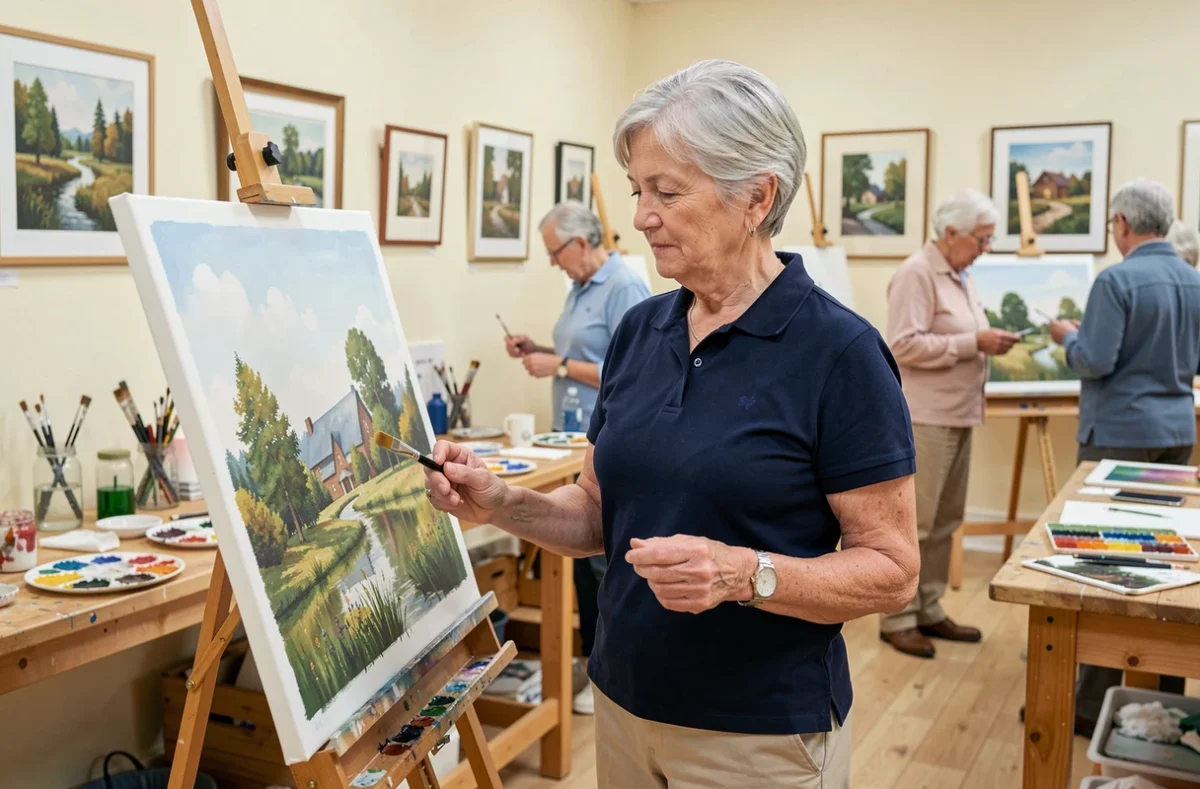
- Creative workshops: painting, writing, amateur theater
The choice depends on personal preferences, but also on regularity. A workshop attended weekly produces more benefits than an occasional outing every two months.
Joining a senior club ultimately means choosing a structure that combines physical activity, cognitive stimulation, and social connection in a suitable environment. The best approach is to start with a personalized assessment or a visit to a Sport-Health House to identify the most relevant activities based on one’s physical condition and desires.