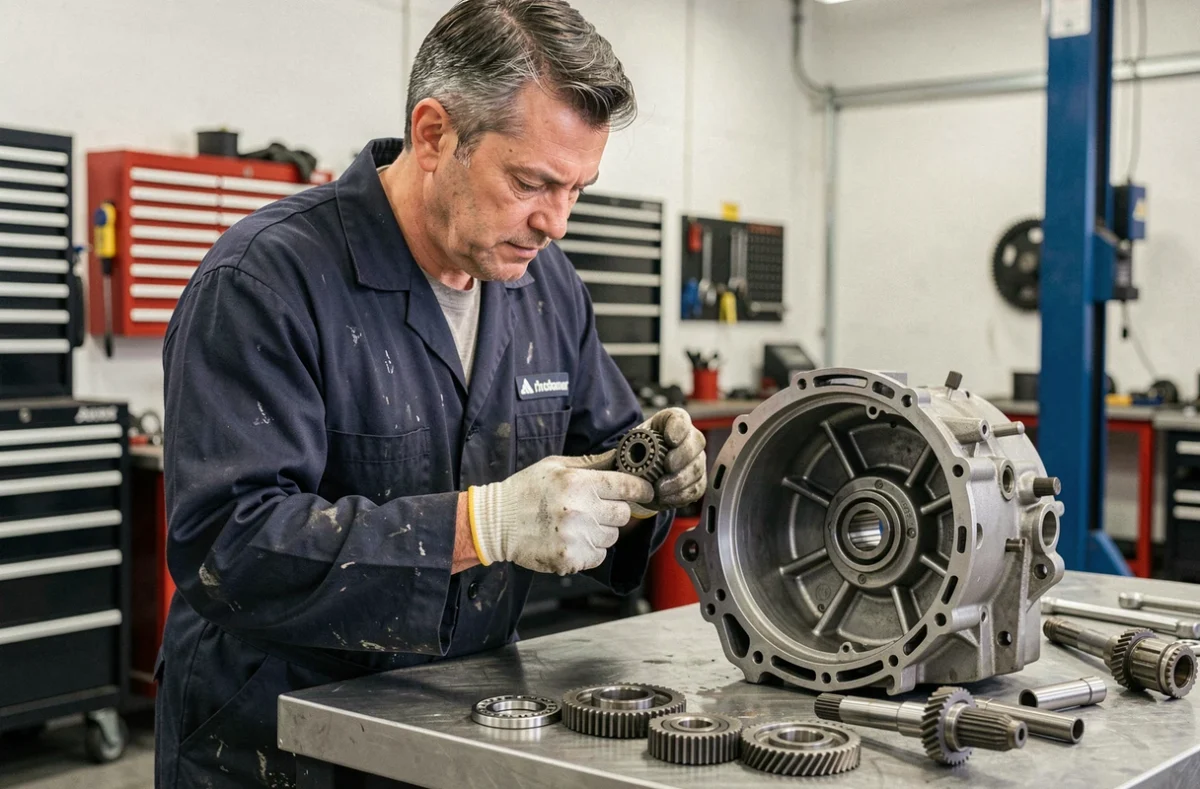
The automotive gearbox is a mechanical assembly whose complexity remains underestimated. Between the primary shaft that receives the engine torque and the wheels that pull the vehicle, a succession of gears, synchronizers, and housings work together to continuously adapt the available power. Understanding this composition and operation allows for better interpretation of suspicious noises, jolts, or the technical choices of manufacturers.
Epicyclic Gear Train and e-CVT: An Architecture Not Explained by Classic Guides
Most presentations of gearboxes stop at the manual/automatic/CVT distinction. One architecture often slips through the cracks: the e-CVT used in Toyota hybrids. Contrary to what its name suggests, the e-CVT uses neither belts, nor chains, nor conical pulleys.
It relies on an epicyclic gear train combined with two electric machines. The power sharing between the internal combustion engine and the motor-generators allows for varying the overall ratio without a succession of fixed mechanical ratios. The technical analysis published by Autoblog in September 2026 explicitly distinguishes this architecture from conventional CVTs.
This difference is not merely academic. It explains why reliability feedback on Toyota hybrids diverges significantly from that of conventional belt CVTs. In a conventional CVT, oil degradation can directly damage the bearing metal surfaces. In an epicyclic gear train, mechanical stresses are distributed differently. To learn everything about the automotive gearbox, this distinction must be integrated into the understanding framework.
Gears, Shafts, and Synchronizers: The Real Mechanics of a Manual Gearbox
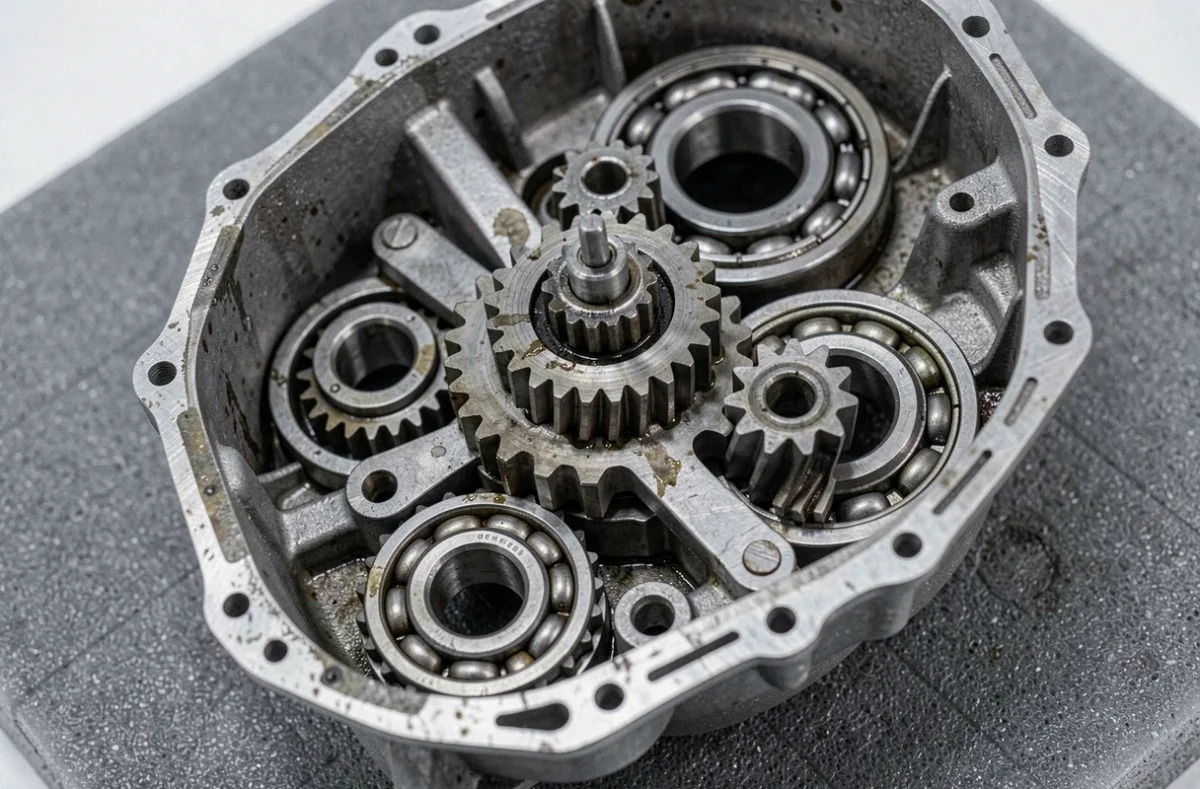
A manual gearbox revolves around two main shafts. The primary shaft receives the engine’s rotation via the clutch. The secondary shaft transmits this rotation to the wheels after passing through the gears.
Each gear corresponds to a pair of gears of different diameters. In first gear, a small gear drives a large one: the transmitted torque is high, and the rotational speed is low. In fifth gear, the ratio reverses. The choice of gear adapts the engine speed range to the vehicle’s speed.
The Role of Synchronizers in Gear Shifting
Synchronizers are conical rings placed between the gears and the secondary shaft. Their function is to equalize the rotational speeds before engaging the gear. Without them, each gear shift would produce a mechanical shock, as seen in older non-synchronized crash gearboxes.
When the driver moves the gear lever, a fork pushes the synchronizing sleeve towards the selected gear. The friction between the conical ring and the gear gradually aligns the two rotational speeds, and then the sleeve locks the engagement. This process takes a fraction of a second in a well-maintained gearbox.
- The primary shaft transmits the engine’s torque to the gearbox via the clutch; it is the entry point of the entire kinematic chain.
- The secondary shaft carries the idle gears and synchronizers; it determines the gear that is actually engaged.
- The selection forks, controlled by the linkage of the lever, move the sleeves to engage or disengage each gear.
- The housing, often made of aluminum, contains the assembly and serves as a reservoir for the gearbox oil that lubricates the gears and bearings.
Transmission Reliability: What Maintenance Really Changes
The idea that a CVT would be intrinsically less reliable than a conventional automatic gearbox deserves to be nuanced. Reliability depends as much on maintenance and usage as on the type of transmission. Towing, heavy loads, heat, and repeated urban trips accelerate fluid degradation and temperature rise.
The available data do not allow for a definitive conclusion about the absolute superiority of one type of gearbox over another in terms of longevity. Technical sources recommend evaluating the cooling capacity and actual usage of the vehicle rather than judging solely based on architecture.
Severe Usage and Transmission Fluid Degradation
In both automatic gearboxes and CVTs, the transmission fluid plays a central role. It lubricates, cools, and transmits hydraulic pressure. A fluid degraded by heat loses its protective properties, which accelerates the wear of internal components.
The so-called severe conditions, rarely mentioned in manufacturer manuals, include driving in mountainous areas, regular towing, and frequent stop-and-go driving in the city. Under these conditions, the oil change interval recommended by the manufacturer may prove insufficient. Field reports vary on this point: some workshops observe early degradation in vehicles that have been maintained according to the official maintenance plan.
DSG Gearbox and Dual Clutch: Increased Complexity, Specific Maintenance
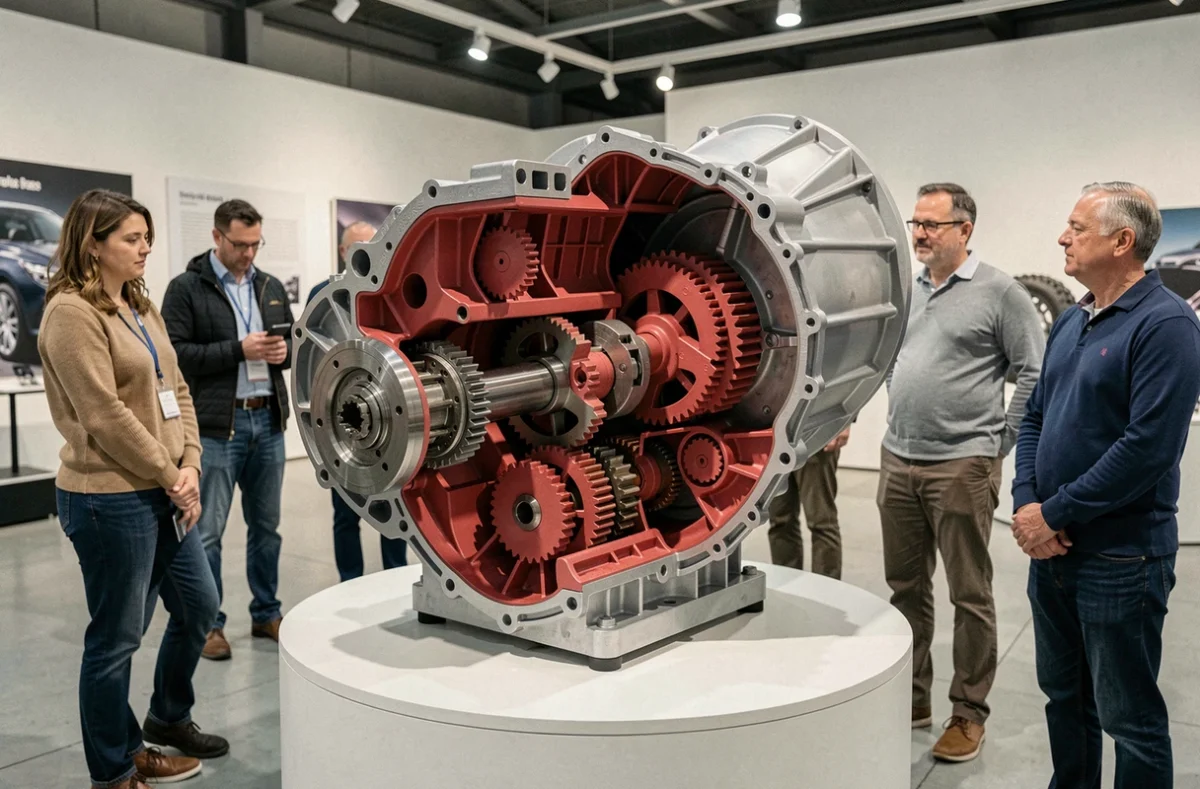
Dual-clutch gearboxes, popularized under names like DSG at Volkswagen or EDC at Renault, combine two half-manual gearboxes controlled by a computer. While one clutch transmits an even gear, the other pre-engages the next odd gear. The shift occurs in a few milliseconds, without interruption of torque.
Two clutches work alternately to eliminate downtime during gear shifts. This architecture offers a driving pleasure superior to that of a conventional manual gearbox and often comparable fuel consumption.
However, the mechatronic complexity of these gearboxes makes them sensitive to clutch wear and failures of the hydraulic control unit. The cost of replacing a mechatronic module far exceeds that of a conventional clutch. The age of the vehicle and the maintenance history then become determining factors when purchasing a used vehicle equipped with this type of transmission.
The gearbox remains a component whose technical evolution blurs traditional categories. Between the epicyclic trains of hybrids, the dual-clutch systems, and the belt CVTs, each architecture responds to a different technical compromise. The choice of transmission is made based on the actual use of the vehicle, not on a theoretical hierarchy between technologies.